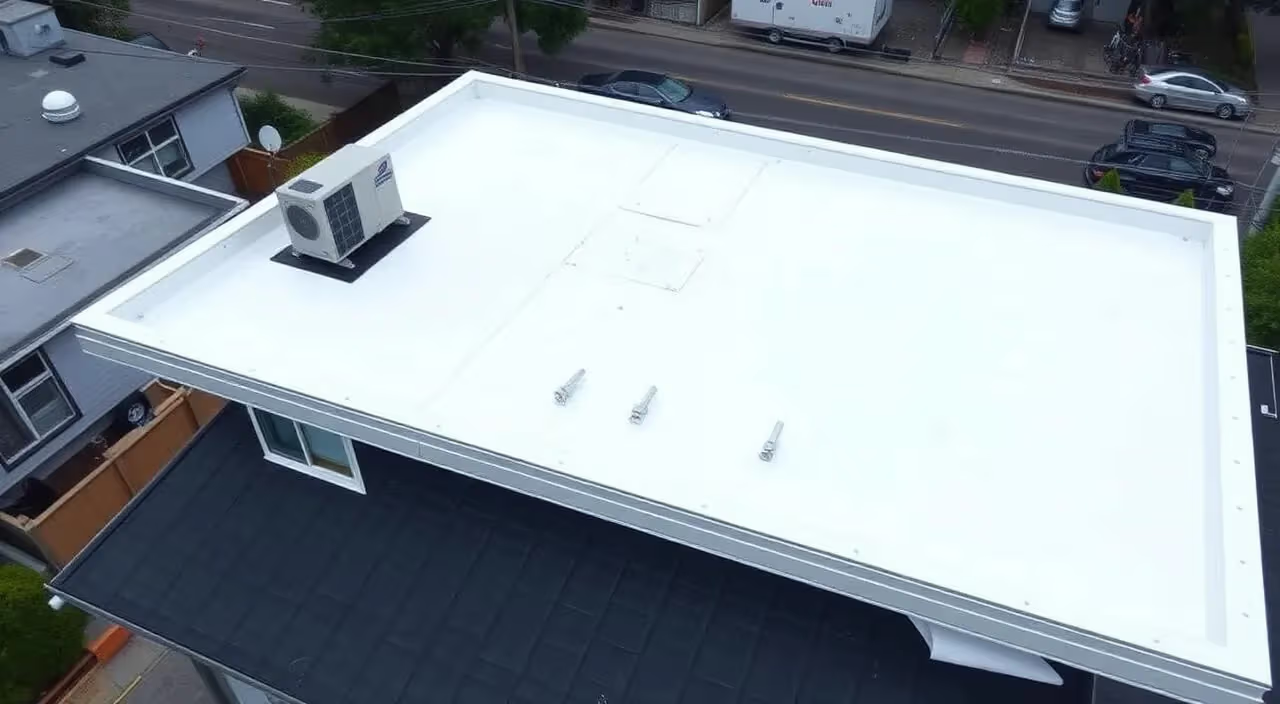
Flat & Low-Slope Roofing: EPDM, PVC, and TPO Membranes
Anything below 2:12 pitch is a low-slope roof, and anything below 1:12 is genuinely flat. Both require a continuous-membrane system rather than a shingled one — water drains too slowly for individual overlapping pieces to keep it out. We install three single-ply membrane families across the Lower Mainland: EPDM (synthetic rubber, fully-adhered or ballasted), TPO (thermoplastic polyolefin, mechanically-fastened with hot-air welded seams), and PVC (polyvinyl chloride, fully heat-welded, the longest-lived of the three). The right choice depends on roof use (walkable deck, equipment platform, garage roof, modern flat residential), drainage strategy, and budget. This page covers each system, the seam technology that makes or breaks a flat roof, BC-specific drainage and parapet detailing, and 2026 pricing.
EPDM (ethylene propylene diene monomer, the black rubber roof) — most cost-effective single-ply, 25–30 year service life, available fully-adhered (best for residential) or ballasted (commercial). The seams are taped or glued, which is the historic weak point — modern factory-laminated EPDM with reinforced seam tape has largely eliminated this. TPO — white reflective surface, heat-welded seams (no glue), mechanically-fastened with plates and screws, 20–25 year service life, popular on newer commercial. PVC — heat-welded seams, chemically resistant (the only choice near restaurant exhaust or near pool decks), 25–35 year service life, the premium pick.
Heat-Welded Seams vs Adhesive Seams
TPO and PVC use hot-air welded seams — a robotic or hand-held welder fuses the membrane chemically into a single continuous sheet. A correctly welded seam is stronger than the parent membrane. EPDM uses adhesive tape (modern reinforced systems) or contact cement (legacy). The failure mode of a flat roof is almost always at the seam, which is why we test every welded seam with a probe and document every adhesive seam with photos. On a 25-year roof, the seam is what determines whether you make it to year 25 or year 12.
Drainage, Parapets, and Scuppers
BC code requires positive drainage — no membrane should have standing water 48 hours after a rain event. On dead-flat roofs we install tapered insulation (typically polyiso) cut to 1/4":12" minimum slope, falling toward internal roof drains or scuppers in the parapet. Parapet caps get pre-finished aluminum coping over a continuous cleat; scuppers get factory-formed sheet-metal sleeves through the parapet with through-wall flashing. On modern Vancouver-style flat residential roofs, we tie the membrane up and over the parapet under the coping rather than terminating mid-wall.
Walkable Decks & Equipment Pads
A flat roof that doubles as a walkable deck needs a wear surface above the membrane: pedestal-set 2x2 concrete pavers, composite deck tiles, or a mechanically-fastened wood sleeper system. We never use the membrane itself as a walking surface — point loads from foot traffic and patio furniture concentrate stress at seams. Equipment pads (heat pumps, ductless mini-split condensers, satellite dishes) sit on Walk-Pad EPDM strips or rubber pad blocks, never directly on the membrane.
Real 2026 Flat Roof Pricing
EPDM fully-adhered, residential garage / addition roof: $850–$1,200 per square installed turnkey. TPO mechanically-fastened, mid-size commercial or modern residential: $950–$1,400 per square. PVC heat-welded, premium residential or restaurant / pool deck: $1,250–$1,750 per square. Recent jobs: Vancouver east-side 4-square garage roof EPDM $4,800. Burnaby modern flat residential 12 sq TPO with parapet $14,800. Richmond restaurant rooftop 22 sq PVC with grease-resistant detailing $32,200. Surrey townhouse complex 38 sq TPO re-cover $46,800.
Tapered Insulation & R-Value
BC Step Code 2 and above effectively require R-31 minimum on roofs in most jurisdictions. On a flat roof we deliver this with polyisocyanurate (polyiso) insulation in 2.5"–4" layers below the membrane, often combined with tapered fill to create slope. Polyiso ages — long-term R-value is roughly R-5.6/inch rather than the printed R-6/inch — so we spec total thickness against in-service R, not nameplate. Cover board (1/2" Dens-Deck or 1/4" GypSheath) goes between insulation and membrane to handle hail and foot traffic without denting the foam below.
Project Gallery
Close-up of black EPDM rubber membrane on a flat roof showing a taped lap seam.Roofer hot-air welding a white TPO membrane seam on a flat commercial roof using a handheld welder.Pre-finished aluminum coping cap on a flat roof parapet wall with a sheet-metal scupper through-wall drain.Concrete pedestal pavers laid as a walkable rooftop deck above a flat membrane roof with downtown Vancouver skyline behind.
Frequently Asked Questions
How long does a flat roof last in BC?
EPDM 25–30 years, TPO 20–25, PVC 25–35 — all assuming positive drainage and no standing water.
Why is my flat roof always wet?
Insufficient slope — original construction probably hit code minimum and the deck has sagged. The fix is tapered polyiso during the next re-cover.
Can I install a deck on top of a flat roof?
Yes — pedestal pavers or sleeper-set composite decking. The membrane stays watertight underneath; the deck wear surface protects it.
Is white TPO worth it for cooling?
On large-area commercial, yes — measurable cooling-load reduction. On a 4–12 square residential garage roof, the energy effect is small; pick by warranty and seam tech instead.
Are you licensed and insured?
Yes — licensed and bonded in BC, $5 million liability insurance, and full WorkSafeBC coverage on every crew member. Documentation provided on request before any contract is signed.
Do you subcontract?
No. Every BudgetRoofers.ca crew member is a full-time employee. We do not subcontract install work.
What's your warranty?
25-year manufacturer material warranty plus 10-year BudgetRoofers.ca workmanship warranty. Premium and designer profiles carry 30-50 year manufacturer terms.
How long does install take?
2-4 days for a typical single-family home; 5-7 for complex layouts; 3-5 working days for cedar conversions.
What if it rains during install?
We monitor Environment Canada hourly and pause for heavy rain. We can tarp and dry-in safely in light rain. Warranty depends on dry installation conditions.
Do you handle permits?
Yes — included in the fixed price. We pull permits in your name and schedule inspections.
What if the decking is rotten?
Standard quote includes 4 sheets of replacement decking. Additional sheets billed at $85-$120 installed; we always show you damaged sheets before replacement.