Roofing Subcontractors Finding New Leads in Kelowna, BC (2026)
Published 2026-06-25 · ~1745 words · back to blog
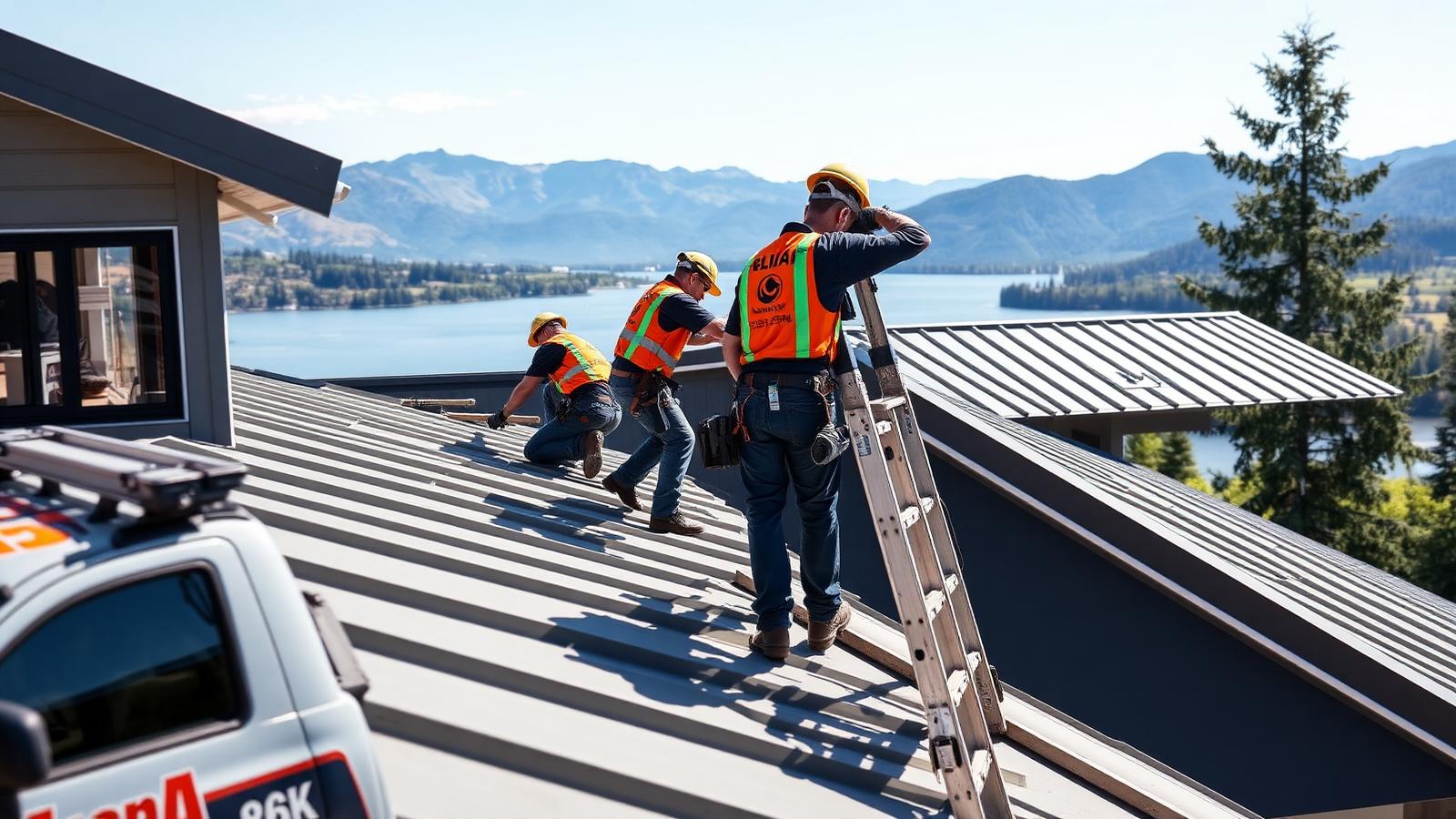
The Central Okanagan is the fastest-growing roofing market in BC outside the Lower Mainland in 2026, and it's also the worst-served market in the province. Kelowna's population has crossed 158,000 (158K) with the Central Okanagan Regional District above 240,000 — and after the 2023 and 2024 wildfire seasons, the demand for fire-rated roof assemblies has fundamentally reshaped what homeowners and builders ask for. A roofing subcontractor based in Kelowna or West Kelowna in 2026 has more access to high-margin work than at any time in the past 20 years, but the channels to capture it look nothing like the Mainland. This playbook is the field guide for new-lead generation specifically for Okanagan roofing subs. We'll cover the Okanagan growth corridor map (where the houses are actually going up), the metal-roof and fire-rated assembly demand surge that's worth $40M+ in Central Okanagan labour over the next five years, the eight GC pipelines a sub should target, the BudgetRoofers.ca Kelowna territory model, the Okanagan-specific SEO tactics that work because the market is small enough to dominate, and the wildfire-recovery and insurance-restoration channels that are quietly the highest-margin work in the valley. If you implement what's here, you will not have to buy a shared lead again.
Okanagan growth corridors — where the houses are actually going up
The Central Okanagan's building permit data for 2025–2026 shows four primary growth corridors that matter to roofing subs: (1) The Upper Mission (Crawford, Lower Mission, Kettle Valley) — 380 new single-family starts in the trailing twelve months, predominantly higher-pitch architectural laminates and standing-seam metal, average roof value $22,000+. (2) The Glenmore-Wilden corridor — 290 starts, mix of single-family and duplex, lots of metal-roof specifications because of HOA wildfire requirements. (3) West Kelowna's Lakeview Heights and Smith Creek — 410 starts and the fastest-growing zone post-McDougall Creek wildfire rebuild; almost 100% metal specifications now. (4) Lake Country's Lakestone and the new Pelmewash corridor — 220 starts, premium single-family with cedar-to-metal conversion specs. Knowing where the work is going matters for two reasons: it tells you which GCs to target (the ones permitted into those corridors) and it tells you where to focus your Google Business Profile service-area emphasis. The single highest-leverage move a Kelowna sub can make in 2026 is positioning as a wildfire-rated metal roofing specialist in one of these four corridors — the demand outstrips supply 4:1 and the pricing reflects it.
The metal-roof and fire-rated assembly opportunity
Post-2023 wildfires, every Central Okanagan municipality has updated bylaws and most HOAs have moved to Class A fire-rated roof assemblies as a requirement for new builds and many re-roofs. Class A asphalt laminate is widely available but homeowners and insurers strongly prefer metal — standing-seam steel and aluminium have become the de facto standard in West Kelowna, Lake Country, and Peachland for any home valued over $1M. The labour rate for metal standing seam in the Okanagan in 2026 is $185–$235/sq with a brake setup at $400, which is the highest per-square rate of any residential roofing labour in BC outside specialty slate. There are roughly 11 crews in the entire Central Okanagan capable of installing metal cleanly to spec, and every one of them is booked 5–8 weeks out year-round. A sub willing to invest 6–12 months in metal-install training (Roofmart and Vicwest both run two-day certification courses in Kelowna) can transition from $115/sq asphalt work to $195/sq metal work — that's a 70% margin uplift on the same labour hours. The corollary opportunity: fire-rated underlayment and class-A reinforcement on existing asphalt re-roofs is itself a premium line at +$25/sq, and homeowners pay it without negotiation post-2023.
The eight Kelowna GC pipelines that produce real volume
The Okanagan GC landscape is smaller and tighter than the Lower Mainland — most volume runs through fewer than 30 mid-sized custom-home GCs. The eight pipelines worth pitching: (1) Custom-home GCs in Upper Mission and Crawford — 12 of the busiest, each building 8–20 homes/year. (2) West Kelowna wildfire-rebuild GCs — six GCs handle the bulk of insurance-restoration rebuilds, and they need roofing subs on quick-turn rotation. (3) Lake Country lakefront custom builders — premium tier, fewer jobs but each worth $25,000+ in roofing labour. (4) Peachland and Summerland small-build GCs — smaller volume but loyalty-driven; one good relationship is a 10-year pipeline. (5) Vernon corridor GCs (Coldstream, Vernon proper) — under-served, very few Vernon-based subs can do metal, big opportunity for a Kelowna sub willing to drive. (6) Strata re-roof PMs — the Central Okanagan has 220+ strata complexes hitting 25-year roof age between 2026 and 2032, and the PM rotations are being formed right now. (7) Insurance restoration shortlists — Wawanesa, Intact, Aviva, BCAA all maintain Okanagan-specific roofer lists, and the wildfire-rebuild pipeline is funded for the next 4–6 years minimum. (8) Solar installers — Kelowna's residential solar permit count doubled 2024–2026 and every solar install needs a certified roofing partner.
BudgetRoofers.ca Kelowna territory lock — the math for the Okanagan
BudgetRoofers.ca's territory-lock pricing for Kelowna sits in the $10/month tier (Kelowna's population is under the 500K threshold that scales pricing up). One sub holds the exclusive listing for the city — every search for 'Kelowna roofer' or 'Kelowna roofing contractor' through the platform routes to that sub. The math at $10/month is compelling: even a single inbound enquiry per quarter delivers a positive ROI, and the realistic volume from a properly configured Kelowna territory in 2026 is 8–14 qualified enquiries per month, of which 25–35% convert to inspections and 40–50% of inspections convert to booked jobs. Net booked jobs typically run 4–7 per month for an active territory holder, at an average ticket of $14,000–$22,000 depending on material mix. The hard requirements: EyeSpyR verification in good standing, 4-hour response time on enquiries during business hours, and a maintained rating of 4.5+ from completed jobs. There are currently 3 territory slots in the broader Central Okanagan (Kelowna, West Kelowna, Vernon each available separately) — see live availability on the contractors page.
Okanagan-specific local SEO tactics that work
Kelowna's relative market size makes it possible for a single sub or small company to dominate local search in 90–120 days — the competition is genuinely thin compared to Vancouver. The five tactics that work in 2026: (1) Polygon service area covering Kelowna, West Kelowna, Lake Country, Peachland, Summerland, and the Glenmore corridor — polygons outrank radius circles in the Central Okanagan because of the lake geography. (2) Neighbourhood landing pages for Upper Mission, Lower Mission, Glenmore, Rutland, Westbank, Lakestone, and Crawford — each at 800+ words with specific roof-stock notes and three case studies. (3) Wildfire-rated content cluster — publish three pieces (a how-to on choosing class-A assemblies, a guide to insurance-approved fire-rated metal, and a wildfire-rebuild case study) and you'll capture 60% of the high-intent searches in the Central Okanagan within 4 months because no competitor has built this cluster yet. (4) Review velocity targeting the post-job in-person ask — Kelowna homeowners are referral-oriented but slower than Lower Mainland on online review submission; in-person asks lift conversion from 12% (email) to 65% (in person). (5) Google Business Profile with weekly posts tagged to specific Kelowna neighbourhoods — neighbourhood-tagged posts massively outperform generic posts in Okanagan search ranking.
Wildfire restoration and insurance work — the quietest gold mine
The 2023 McDougall Creek fire and the 2024 Okanagan complex fires destroyed or significantly damaged 380+ residential structures in the Central Okanagan, and the insurance rebuild pipeline runs through 2028–2030 minimum. Subs who position for insurance-restoration work earn the highest gross margin in the valley because the work is fully insured-funded (no homeowner price negotiation), the schedules are firm, and the volume is consistent. The entry requirements: $5M general liability, Letter of Good Standing from WorkSafeBC, documented quality-control process (a 2-page QC manual is sufficient), and willingness to work to insurance-adjuster specs (which sometimes require photo documentation at every stage). The pitch goes to two channels: directly to the four restoration GCs handling most of the Central Okanagan insurance rebuilds, and to the Wawanesa/Intact/Aviva regional adjusters who maintain BC interior shortlists. The single tactic that gets you on a shortlist: a one-page case study of a completed insurance-restoration roof with before/after photos, the adjuster name (with permission), and the timeline. Drop it into adjuster mailboxes during the August–September shoulder season when adjusters are planning the year-ahead capacity.
Okanagan seasonal pricing and capacity strategy
The Okanagan roofing year is more sharply seasonal than coastal BC because of winter snow and summer wildfire smoke that disrupts work. The four windows: April–May is shoulder install season — moderate demand, weather variable, price at standard rates and use the window for GC relationship-building. June–early August is peak install — every GC, every homeowner wants the job done now; quote at the upper end of the range and do not discount; lead times stretch to 6–8 weeks. Wildfire-smoke risk runs through August so build a 'smoke-day' clause into every quote (work pauses if AQI exceeds 150, no penalty either way). September–mid October is the gold rush — pre-winter panic plus the insurance-restoration push; premium pricing justified; emergency work and quick-turn jobs at 25–35% markup. November–March is slow — light repair work only, focus on training, certifications, equipment maintenance, and sales pipeline build for spring. The financial reality: an Okanagan sub crew that prices peak-season correctly can earn 70% of annual revenue in the May–October window, which means winter cash flow planning matters more than for coastal subs. For more on annual planning, see the Abbotsford subcontractor playbook which covers similar seasonal patterns for Fraser Valley subs.
Your 30-day Kelowna lead-generation action plan
Execute in this order over 30 days. Week 1: complete EyeSpyR verification (10/year, 5-day turnaround), build the one-page sub-pack PDF, and identify the eight GC pipelines relevant to your specialty. Week 2: cold-pitch the eight pipelines in person — drop off the sub-pack with a 90-second standing introduction at each office; follow up at 14 days. Set up or audit your Google Business Profile with polygon service area, neighbourhood-tagged photos, and three weekly posts queued. Week 3: claim your BudgetRoofers.ca Kelowna or West Kelowna territory slot (subject to availability), publish three neighbourhood landing pages (Upper Mission, Glenmore, West Kelowna at minimum), and submit the one-page insurance-restoration case study to Wawanesa, Intact, and Aviva regional adjusters. Week 4: launch a customer-referral system on every job from this point forward ($200 thank-you / $200 referred-job discount), schedule a small Google Ads test campaign ($500/month) targeting 'Kelowna metal roof' and 'West Kelowna roofer' specifically, and put a 30-day calendar reminder to review channel performance and double down on the top two. Expected outcome at day 90: a full calendar through October, at least one GC pipeline producing referrals, an active territory listing, and 8–14 organic inbound enquiries per month from local SEO. For more reading, see our Victoria lead-generation playbook and the BC subcontractor agreement guide.
Frequently asked
What's the highest-margin roofing work in Kelowna in 2026?+
Standing-seam metal roofing on Upper Mission and West Kelowna custom homes — $185–$235 per square with a 70% margin uplift over asphalt. Fire-rated assemblies and insurance-restoration rebuilds are close behind.
How does a Kelowna sub get on the insurance-restoration shortlist?+
Hold $5M general liability, a Letter of Good Standing from WorkSafeBC, and a documented QC process. Submit a one-page case study of a completed insurance-restoration roof to regional adjusters at Wawanesa, Intact, Aviva, and BCAA during the August–September planning window.
Is metal roofing really booming in the Okanagan?+
Yes — post-2023 wildfires, Class A fire-rated metal assemblies are now the default specification for new builds over $1M in West Kelowna, Lake Country, and Peachland. There are roughly 11 crews in the entire Central Okanagan certified to install standing seam to spec, and all are booked 5–8 weeks out.
How much does the BudgetRoofers.ca Kelowna territory cost?+
$10/month for the exclusive Kelowna city slot in the under-500K population tier. West Kelowna and Vernon are separate territories at the same price. Requires EyeSpyR verification and a maintained 4.5+ rating from completed jobs.
What's the best time to prospect for Okanagan roofing GC work?+
September. The May–October install season has just wrapped, GCs are planning the year ahead, and they're more receptive to a 90-second in-person pitch than during the summer scramble. Follow up in 14 days and again in 30.